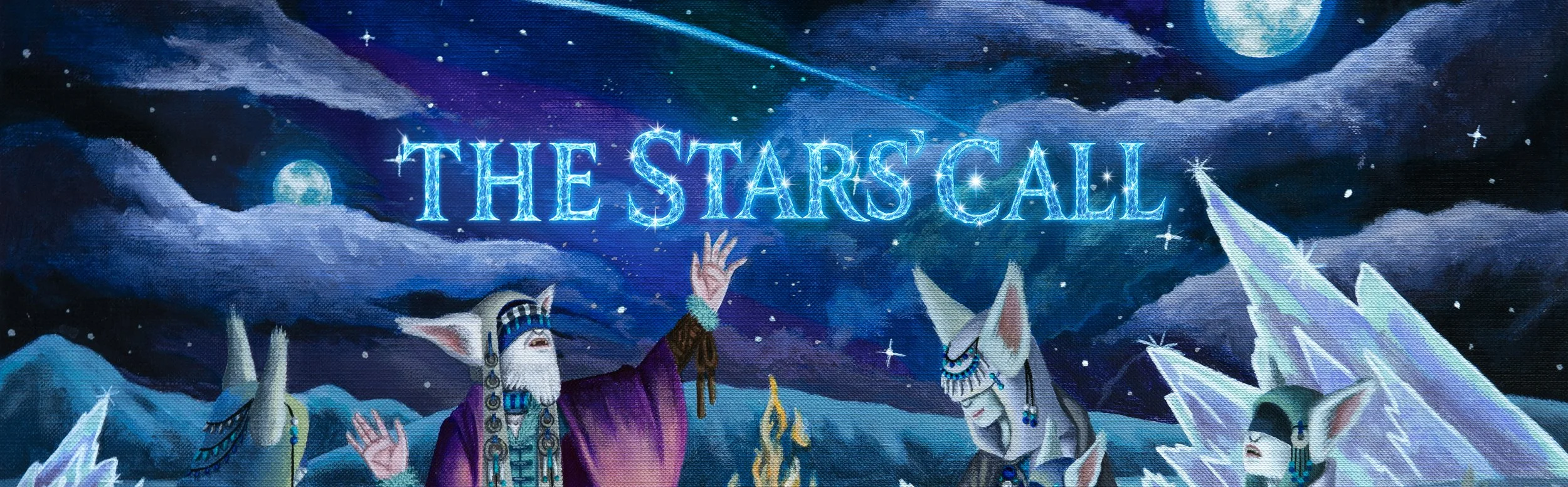
Read The Stars’ Call here.
The Stars’ Call
An Editorial Production Workflow Case Study
Managing revisions from manuscript through publication.
Last Updated: July 2026
Project Overview
I wrote, illustrated, and independently published The Stars' Call, a short story, managing the full editorial production pipeline from concept through final publication. This covered narrative development, manuscript editing, visual direction, illustration production, layout design, and final quality review—coordinating editorial and visual workflows to keep the writing, artwork, and presentation consistent.
Project Details:
Role: Writer, Illustrator, Editor, Publisher
Project Type: Illustrated Short Story
Genre: Fantasy
Target Audience: Adults (age 20 - 50)
Length: 7,076 words
Format: Digital, Illustrated
Tools: Microsoft Word, Adobe Photoshop, Acrylic Paint, Canvas
Project Duration: ~4 months
Concept Development
I began by establishing the story's premise, themes, characters, and emotional tone, then built a structured manuscript outline. Early planning also mapped where illustrations would support the narrative and how visual storytelling could reinforce key moments without disrupting pacing. Since I was both writer and illustrator, planning editorial and visual direction together kept the creative vision consistent from the start.
Key Deliverables
Story premise and themes
Character concepts
Story outline
Visual direction
Illustration planning
Manuscript Development & Editorial Process
I drafted the manuscript and refined it through multiple revision rounds—early passes focused on structure, pacing, and character development; later passes on dialogue, sentence clarity, continuity, and consistency. Reviewing in stages let me catch structural issues before investing time in final artwork and kept illustrated scenes complementing the narrative rather than repeating it.
Editorial Tasks
Drafted manuscript
Revised story structure
Refined pacing and dialogue
Edited for clarity and consistency
Proofread final manuscript
Visual Development & Art Direction
Once the manuscript reached a stable draft, I developed illustrations for key emotional moments, planning artwork alongside the text to keep written description and visual interpretation aligned. Composition, lighting, and color choices supported each scene's atmosphere while maintaining a unified visual style across the publication. Final artwork was painted traditionally in acrylic, then digitized and prepared for publication.
Illustration Tasks
Planned illustration placement
Developed scene compositions and creature designs
Produced traditional acrylic paintings
Digitized and color-edited artwork
Editorial layout & Publishing Preparation
With manuscript and illustrations complete, I integrated text and artwork into a cohesive publication, balancing readability with visual impact so illustrations supported the reading experience rather than disrupting it. Final production covered formatting, quality review, and preparation of digital publication files.
Publishing Tasks
Integrated text and illustrations
Designed page layouts
Reviewed formatting consistency
Performed final quality assurance
Challenges & Solutions
1. Balancing editorial and illustration production
Manuscript revisions could affect accompanying artwork, so I completed major structural edits before producing final illustrations—reducing rework and keeping text and art aligned.
2. Maintaining consistency with an established IP
The story is part of my existing fantasy IP, so I cross-referenced the manuscript and illustrations against existing lore, character designs, and artwork throughout production, keeping it consistent with the broader universe while still working as a standalone story.
3. Managing an independent production schedule
Working across multiple disciplines required careful prioritization. Breaking production into distinct editorial, illustration, and publishing stages kept progress steady and reduced context-switching between writing and artwork.
Final Outcome
The result is a fully illustrated digital fantasy short story combining original writing with traditional artwork. Managing every stage of production gave me hands-on experience coordinating editorial development, illustration production, page layout, and publication while keeping multiple creative disciplines consistent.
Project Outcomes
Published a 7,076-word illustrated fantasy short story
Produced original traditional illustrations
Managed the complete editorial production workflow
Coordinated writing, editing, illustration, and publishing independently
Strengthened project planning, editorial, and production management skills
Key Skills Demonstrated
Editorial
Developmental Editing
Copy Editing
Proofreading
Quality Assurance
Content Review
Continuity Management
Production
Project Planning
Workflow Coordination
Production Scheduling
Asset Management
Independent Project Management
Documentation
Creative
Creative Writing
Illustration
Art Direction
Visual Storytelling
Traditional Painting
Brand Consistency